Tax Credits: What CPAs Need to Know (and how to track them all)

Quick Summary

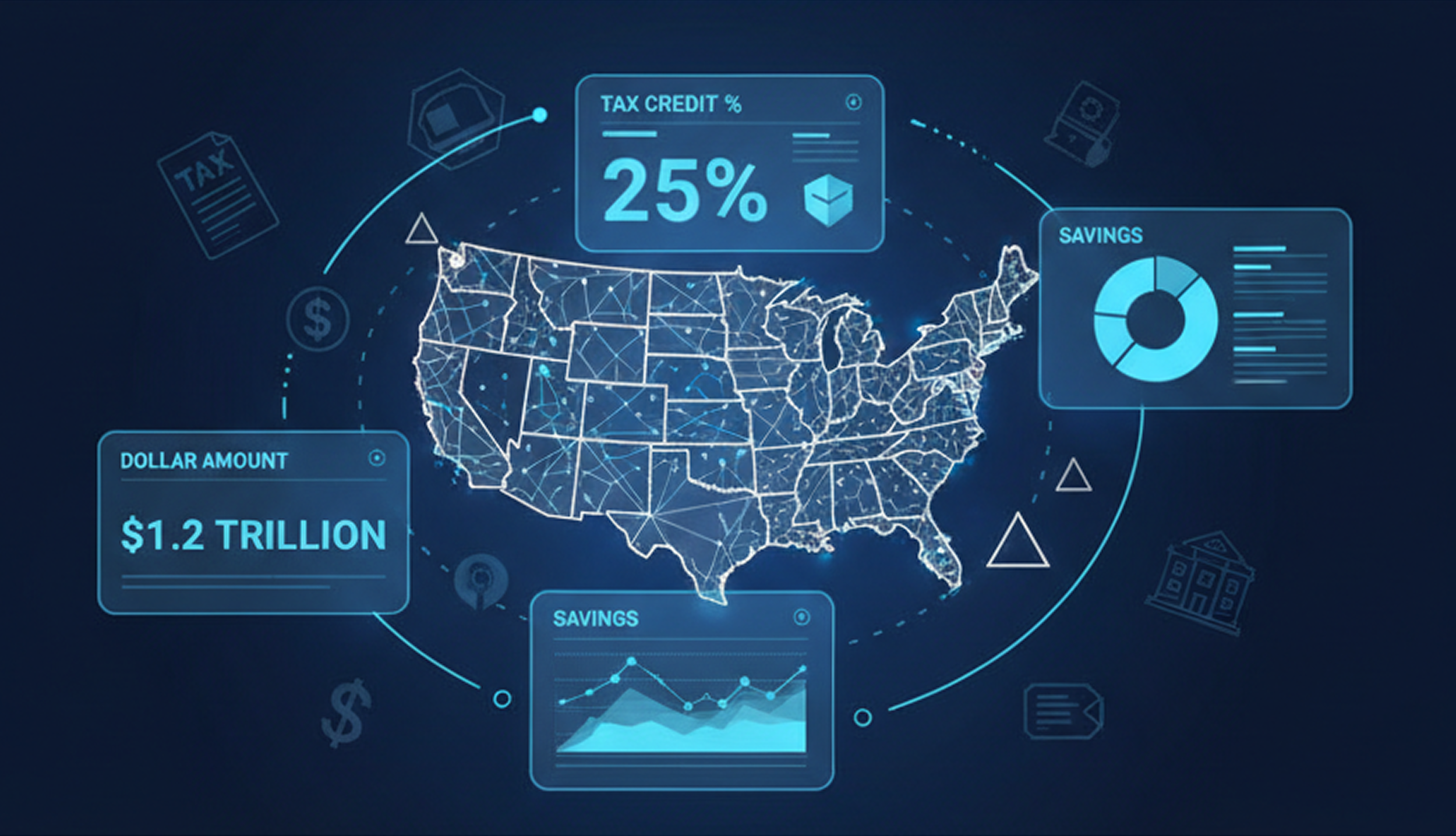
With over 1,200 federal, state, and zone-based tax credits and incentives available to U.S. businesses, CPAs who master this landscape become indispensable strategic partners for their clients. This guide covers the major category of tax credits, best tools for tracking them, and how forward-thinking CPA firms are turning adding high-margin advisory services.

Introduction: The Untapped Advisory Opportunity Sitting Inside Your Client List

If you're a CPA or tax professional serving corporate clients, you already possess something extremely valuable: an ongoing relationship with businesses that almost certainly qualify for tax credits and incentives they're leaving on the table.

The gap between what's available and what's actually claimed is staggering. Across federal, state, and local programs, billions of dollars in tax credits go unclaimed every year — not because businesses don't qualify, but because most companies simply don't know the credits exist.

For small-to-mid-market CPA firms, this represents one of the most compelling growth opportunities in today's market. Tax credits and incentives advisory is a natural extension of compliance work. Since you already know your clients' financials, their industries, their payroll, and their capital expenditures, you're in a uniquely powerful position to identify credit eligibility, substantiate claims, and deliver measurable ROI far beyond compliance work alone.

The challenge? Tracking these credits across constantly shifting programs is genuinely complex. Keeping current on eligibility rules, documentation requirements, and audit-defensible substantiation standards requires both specialized knowledge and the right toolset.

This guide gives you both. We've organized the landscape of tax credits into actionable categories, reviewed the key resources and tools available to CPA practices, and outlined how leading firms are systematically expanding into this high-value service area.

If your firm handles corporate tax preparation and has ongoing relationships with business clients, this guide is for you.

Part 1: The Tax Credits Landscape — A Complete Category Overview

Understanding the Largest Tiers of Tax Incentives

Before diving into specific credit categories, it helps to understand the structural tiers of the U.S. tax incentive ecosystem:

Federal Tax Credits Administered by the IRS; apply uniformly across all states. These tend to be the highest-dollar opportunities and the most heavily scrutinized in audits.
State Tax Credits Administered by individual state revenue agencies. These vary dramatically in scope, generosity, and documentation requirements. Some states are exceptionally active; others offer minimal programs.
Zone-Based Incentives Includes enterprise zones, opportunity zones, empowerment zones, and special economic districts. They offer reduced tax rates, hiring credits, and investment deductions for businesses located in or investing in designated geographic areas — and are often the least-publicized tier, requiring location-specific data to identify.

For a comprehensive CPA practice, all three tiers matter — and managing all three simultaneously is where the real complexity (and opportunity) lies.

Part 2: Federal Tax Credits — Category by Category

1. Research & Development (R&D) Tax Credit

The Section 41 R&D Tax Credit is arguably the single most lucrative and widely applicable federal credit available to U.S. businesses. It rewards companies for investing in qualified research activities — and the definition is broader than most business owners (and many CPAs) realize.

Who Qualifies Any company developing or improving products, processes, software, formulas, or techniques. Includes manufacturers, software developers, engineering firms, food & beverage producers, healthcare, financial services, and more.
Credit Value Generally 6–8% of qualified research expenses (QREs). Can be applied against income tax or — for qualifying small businesses — against payroll taxes (up to $500,000/year for startups).
Key Form Form 6765 (Credit for Increasing Research Activities)
Retroactive Potential Amended returns can capture R&D credits up to 3 years back — a significant opportunity for clients who have never claimed the credit.
Est. Client Value $10,000–$500,000+ annually depending on qualifying spend
Pros / Advantages   Cons / Considerations
High-dollar opportunity applicable across many industries Substantiation is complex and documentation-intensive
Recurring annual credit creates ongoing advisory engagement Requires technical understanding of qualifying activities
Strong differentiation from compliance-only competitors IRS audit risk is elevated for large or poorly-documented claims
Retroactive claims add immediate revenue for firm and client May require coordination with engineers or scientists

2. Work Opportunity Tax Credit (WOTC)

The Work Opportunity Tax Credit (WOTC) is a federal hiring incentive that rewards employers for hiring individuals from certain targeted groups who face significant barriers to employment.

Targeted Groups Veterans, SNAP recipients, ex-felons, long-term unemployment recipients, SSI recipients, designated community resident youth, vocational rehabilitation referrals.
Credit Value 25–40% of first-year wages; up to $2,400–$9,600 per qualifying hire. Long-term family assistance recipients may generate credits up to $10,000 over two years.
Key Forms Form 5884 (Work Opportunity Credit); IRS Form 8850 for SWA certification (must be filed within 28 days of hire date)
Critical Timing Note The 28-day certification window is strict and commonly missed — a key advisory talking point with clients.
Est. Client Value $5,000–$100,000+ annually for mid-sized employers
Pros / Advantages   Cons / Considerations
Applicable to virtually any business that hires employees State Workforce Agency processing times vary and can be slow
Straightforward once workflow is established Requires HR involvement and employee consent
Excellent entry point into credits advisory Value per hire is modest — scale requires volume
Can be automated with HR/payroll system integrations  

3. Energy & Clean Energy Tax Credits (IRA Credits)

The Inflation Reduction Act of 2022 dramatically expanded the landscape of federal energy tax credits, creating a suite of incentives for businesses investing in clean energy, energy efficiency, electric vehicles, and domestic manufacturing. These credits are projected to be among the most impactful federal incentives of the decade.

⚠  Legislative Update: One Big Beautiful Bill Act (OBBBA) — Signed July 4, 2025

REPEALED: Section 45W (Commercial Clean Vehicle Credit) — repealed for vehicles placed in service after December 31, 2025.

EARLY TERMINATION (Wind & Solar): Sections 48E/45Y — no credit if construction begins on or after July 4, 2026, and placed in service after December 31, 2027. Other technologies (geothermal, nuclear, storage) phase out beginning 2032–2033.

FEOC RESTRICTIONS ADDED: Sections 45X, 45Y, 48E, 45Q, 45Z — companies receiving material assistance from prohibited foreign entities (China, Russia, North Korea, Iran) are ineligible. Transferability to foreign-influenced entities also restricted.

EXTENDED/EXPANDED: Section 45Z (Clean Fuel Production Credit) — extended two years through December 31, 2029, though SAF rate reduced and domestic sourcing (U.S./Canada/Mexico) now required.

INTACT (LEGACY): Legacy Sections 48 and 45 (pre-IRA ITC/PTC) remain intact for grandfathered projects and are not subject to the new FEOC restrictions.

Section 179D Energy Efficient Commercial Buildings Deduction — up to $5.00/sq ft. Expanded under IRA to include tax-exempt organizations with designer allocation.
Section 48 (ITC) Now governed by Section 48E (Clean Electricity ITC) under tech-neutral framework. OBBBA Impact: Wind and solar projects face early termination — no 48E credit if construction begins on or after July 4, 2026, and placed in service after December 31, 2027. Non-wind/solar technologies retain longer timelines. Legacy Section 48 remains intact for grandfathered projects.
Section 45 (PTC) Now governed by Section 45Y (Clean Electricity PTC) under tech-neutral framework. OBBBA Impact: Same early termination applies as 48E for wind and solar. Geothermal, nuclear, and other firm clean electricity sources phase out beginning 2033. Legacy Section 45 PTC remains intact for grandfathered projects.
Section 45W OBBBA REPEALED: The Section 45W Commercial Clean Vehicle Credit was repealed for most vehicles placed in service after December 31, 2025. CPAs with fleet-heavy clients should no longer plan around this credit going forward.
Section 45X Advanced Manufacturing Production Credit — for domestic production of clean energy components. OBBBA Impact: Wind components produced and sold after December 31, 2027 are no longer eligible. New FEOC restrictions apply.
Est. Client Value $50,000–$10M+ for qualifying capital investments
Pros / Advantages   Cons / Considerations
Large-dollar credits with multi-year planning horizons Regulatory guidance is still evolving
Transferability largely maintained under OBBBA — credits can still be sold to unrelated parties (with restrictions for foreign-influenced entities) Highly technical; may require energy engineers or consultants
Growing client demand as businesses pursue sustainability goals Prevailing wage and apprenticeship requirements apply to bonus rates
Excellent opportunity to differentiate in manufacturing and real estate OBBBA: Wind and solar 48E/45Y credits terminate for BOC on or after July 4, 2026 / placed in service after Dec 31, 2027; Section 45W repealed; FEOC restrictions now apply to 45X, 45Y, 48E, 45Q, and 45Z

4. Additional Federal Credit Programs

Opportunity Zone (OZ) Investments

Established under the 2017 TCJA, OZ incentives allow investors to defer and potentially reduce capital gains taxes by reinvesting gains into Qualified Opportunity Zone Funds (QOFs) invested in designated low-income communities. The 10-year gain exclusion remains powerful for ongoing OZ investments.

Section 45S — Employer Credit for Paid Family and Medical Leave

A federal credit of 12.5%–25% of wages paid during FMLA leave, depending on the pay rate provided. Requires a written policy meeting specific IRS requirements.

Disabled Access Credit (Section 44)

Non-refundable credit of 50% of eligible access expenditures (up to $10,250) for small businesses making improvements to accommodate individuals with disabilities. Applicable to businesses with $1M or less in gross receipts OR 30 or fewer full-time employees.

New Markets Tax Credit (NMTC)

The NMTC program provides a credit equal to 39% of a qualified equity investment in Community Development Entities (CDEs) serving low-income communities, claimed over 7 years. High-value but structurally complex — typically requires specialized legal and financial counsel.

Part 3: State Tax Credits — The Hidden Opportunity Layer

State tax credits represent a massive and systematically underutilized opportunity for CPA practices. While federal credits get most of the attention, many states offer incentives that are dollar-for-dollar as valuable — and in some cases more generous.

The Scale of State Credit Programs The United States currently offers more than 1,000 active state and local tax incentive programs spanning all 50 states. Managing this landscape requires either deep state-by-state expertise or a technology platform capable of tracking and updating this information at scale.

State R&D Credits

More than 35 states offer their own R&D tax credits that stack on top of the federal credit. State R&D credit rates vary significantly — from 1.5% in Arkansas to 24% for certain taxpayers in Arizona.

State Rate Key Feature
California 15% No cap; refundable for certain small businesses
New York 9% Partially refundable at 50% for eligible companies
Massachusetts 10% Partially refundable for certain businesses
Arizona Up to 24% High rate for certain taxpayers
Texas N/A No R&D credit (but no corporate income tax)

State Hiring & Workforce Credits

Beyond federal WOTC, many states offer supplemental hiring incentives tied to job creation, industry targeting, or geographic focus.

  • Georgia: Retraining Tax Credit; Job Tax Credit (up to $4,000/job in Tier 1 counties)
  • Ohio: Job Creation Tax Credit (performance-based, refundable)
  • Missouri: Missouri Works Program (withholding tax retention tied to new jobs)
  • Illinois: Economic Development for a Growing Economy (EDGE) Tax Credit

State Investment & Capital Credits

Many states offer investment tax credits for qualified capital expenditures, particularly in manufacturing, technology, and energy sectors.

  • South Carolina: 2.5% credit on qualified manufacturing property
  • Iowa: Investment Tax Credit (refundable) for qualifying projects
  • Alabama: Growing Alabama Credit for site preparation and infrastructure

Enterprise Zones and Opportunity Areas

The federal government and most states implement geographically targeted incentive programs — like enterprise and opportunity zones — which confer benefits such as reduced tax rates, hiring credits, and investment deductions.

CPA Advisory Opportunity Many clients are unaware their business location qualifies for geographic incentives. A review of client addresses against enterprise zone maps can surface significant credit opportunities with minimal client effort.

Part 4: Industry-Specific Tax Credits & Incentives

Beyond general credits, certain industries have access to highly specialized — and often highly lucrative — incentive programs.

Manufacturing

Manufacturing clients represent some of the richest credit opportunities in the CPA universe:

  • Section 179D (energy-efficient building improvements)
  • State manufacturing investment credits in most industrial states
  • R&D credits for product and process development (even for traditional manufacturers)
  • WOTC for production workforce hiring

Technology & Software

Software companies are among the most consistently strong R&D credit candidates, as qualified software development activities fit squarely within the Section 41 definition of qualified research.

  • Federal and state R&D credits (high applicability across virtually all software companies)
  • WOTC for technical hiring
  • State startup and innovation incentives (Virginia, Texas, and others)

Healthcare & Life Sciences

  • Orphan Drug Credit (Section 45C): 25% credit on qualified clinical testing expenses for rare disease drugs
  • Federal and state R&D credits for clinical research, drug development, and medical device R&D
  • Section 179D for qualifying healthcare facility improvements

Real Estate & Construction

  • Section 45L: New Energy-Efficient Home Credit (up to $5,000/unit for qualifying residential construction)
  • Section 179D: Up to $5.00/sq ft for commercial building energy improvements
  • Historic Tax Credit (Section 47): 20% credit on qualified rehabilitation expenditures for certified historic structures
  • Low-Income Housing Tax Credit (Section 42): 4% and 9% credits for qualifying affordable housing projects

Agriculture & Food Production

  • Biodiesel and Alternative Fuel Credits (Section 40A series)
  • State-specific agricultural credits (soil conservation, farmland preservation, water quality)

Part 5: Tools, Software & Technology for Tax Credit Management

For CPA firms serious about building a credits and incentives practice, the right technology tools are a core requirement. The complexity and volume of available credits, combined with documentation and audit-defense requirements, makes spreadsheet-based management insufficient at any meaningful scale.

Incentify Explore ★ Recommended for CPA Firms

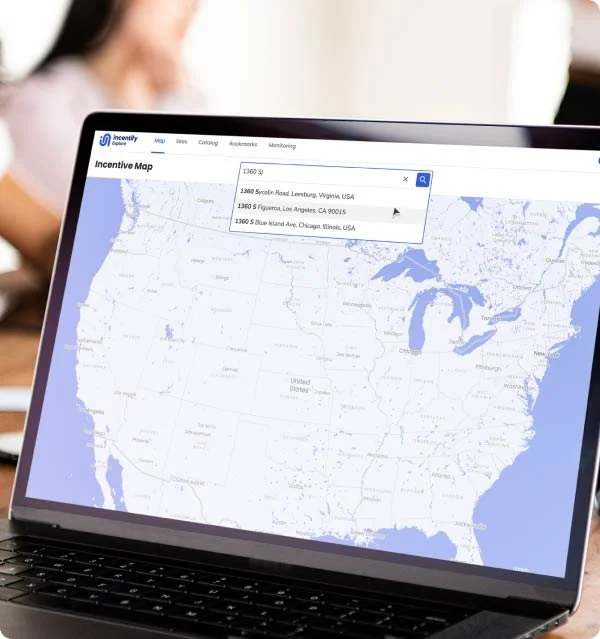
Incentify Explore is an AI-powered tax credit discovery platform built specifically for CPA firms. It gives practitioners instant access to 1,200+ federal, state, and local credits and incentives in a single interface, replacing the time-consuming process of manually researching government websites and maintaining program trackers in spreadsheets.

Best For Small-to-mid-market CPA firms (5–100 staff) serving corporate clients who want to offer credits and incentives advisory without hiring in-house specialists.
Database Coverage 1,200+ federal, state, and zone-based tax credits and incentives — one of the broadest coverage databases available to CPA practitioners.
Ways to Search AI Navigator — conduct a thorough guided incentive review using AI to walk through eligibility questions and identify the strongest opportunities for a specific client.

Single Address Search — enter a client's address to instantly surface eligible credits at that location.

Site Manager (Bulk Upload) — upload multiple client sites at once to run credit searches across your entire book of business simultaneously.

Catalog — browse and filter the full 1,200+ credit library by jurisdiction, industry, or credit type.
Client Engagement Share interactive, firm-branded landing pages directly with clients. Each page features a credits & incentives-trained AI chatbot that walks clients through eligible programs, answers their questions, and captures their interest — delivering warm, qualified leads back to the CPA.
Pricing Starts at $275/month for up to 5 users. Visit cpa.incentify.com for current plan details.

Explore vs. Manual Research: Side-by-Side

The manual approach — hunting through IRS.gov and individual state agency sites, then tracking program details in a spreadsheet — works for a single client with one or two credits. It breaks down fast at scale.

Manual research resources include:

  • IRS.gov — Credits & Deductions (Business): Authoritative source for compliance requirements on all federal tax credits
  • IRS Form Instructions: Detailed instructions for Forms 6765 (R&D), 5884 (WOTC), 8826 (Disabled Access), 3468 (Investment Credit), and all other credit-related forms
  • Treasury.gov — IRA Energy Credits Guidance: Comprehensive guidance on IRA energy credits, bonus rates, transferability, and direct pay provisions
  • CDFI Fund: Administers New Markets Tax Credit and CDFI programs (cdfifund.gov)
  • State Revenue Agency Websites: Official guidance on available state credits (quality varies significantly by state)
Factor Incentify Explore Manual Research
Program coverage ✓ 1,200+ federal, state & local programs in one place ⚠  Depends on researcher's knowledge; gaps are common
Speed per client ✓ Results in seconds via address search or AI Navigator ⚠  Hours of research across multiple government sites
Searching multiple clients ✓ Bulk upload entire client list via Site Manager ⚠  Must repeat full research process for every client
Client-facing tools ✓ Firm-branded landing pages with AI chatbot; clients express interest directly ⚠  No client-facing interface; CPA must present findings manually
Keeping programs current ✓ Database maintained and updated by Incentify's team ⚠  CPA must monitor 1,200+ programs across dozens of agencies
Starting cost ✓ $275/month for up to 5 users ⚠  "Free" in dollars but expensive in billable time per client

Part 6: Building a Credits & Incentives Practice — A Practical Roadmap

Understanding the credit landscape is one thing. Building a scalable, profitable practice around it is another. Here's how forward-thinking firms are doing it.

Step 1 Assess Your Current Client Base

Start with what you have. Conduct a review of your existing corporate client list to identify credit opportunity clusters:

  • Which clients are in manufacturing, technology, or other R&D-active industries?
  • Which clients have payroll? (WOTC opportunity)
  • Which clients have made energy or capital investments? (IRA credits)
  • Which clients are multi-state filers with exposure to state credit programs?
  • Which clients have never been formally reviewed for credits?

A simple analysis of your current client profiles against the major credit categories can surface six to seven-figure opportunities that are already sitting in your book of business.

Step 2 Select the Right Technology Infrastructure

CPA firms that try to manage credits and incentives with spreadsheets and manual research quickly hit a ceiling. Key criteria for evaluating a credits management platform:

  • Breadth of coverage: Does the database cover federal, state, and zone-based programs comprehensively?
  • CPA firm workflow alignment: Is it designed for multi-client CPA firm use, not just corporate tax departments?
  • Retroactive identification: Can it surface retroactive filing opportunities for existing clients?

Step 3 Define Your Service Model

There are several ways CPA firms can structure credits and incentives services:

Bundled Advisory Include credits review as part of existing engagement scopes — positioning it as added value and differentiating from compliance-only competitors.
Standalone Projects Offer credits reviews as standalone fixed-fee or hourly projects, particularly for new clients or retroactive claims outside the existing engagement scope.
Contingency Arrangements Price on contingency (a percentage of credits identified). Aligns incentives but requires careful evaluation of independence and billing conflicts.
Ongoing Managed Service For high-activity clients, offer an ongoing credits management service — annual reviews, documentation management, amended return coordination.

Step 4 Launch with Quick Wins

The fastest way to build internal momentum and client confidence is to deliver early, visible wins. Focus initial efforts on:

  • Retroactive R&D credit reviews for manufacturing or technology clients who have never claimed — can deliver significant refunds with straightforward analysis
  • WOTC implementation for any client that regularly hires — modest complexity, steady ongoing value
  • Section 179D reviews for clients who have recently completed commercial renovation or construction projects

Each quick win builds case study evidence, firm confidence, and client trust that supports further practice expansion.

The Bottom Line for CPA Practices

The tax credits and incentives landscape represents a genuine growth frontier for CPA practices — not a niche specialty that requires years of specialized training, but an adjacent service that builds directly on the expertise and client relationships you already have.

The numbers tell the story: with more than 1,200 federal, state, and zone-based programs available, and the majority of eligible businesses either unaware or underclaiming, the gap between opportunity and capture is enormous. CPA firms that systematically address this gap are adding meaningful revenue, deepening client relationships, and building a durable competitive advantage that compliance-only competitors cannot replicate.

Our Top Recommendations by Firm Situation

Your Situation Recommended Incentify Explore Plan & Approach
Just starting to consider credits advisory Explore Free Plan (no cost). Run up to 5 client incentive reviews using AI Navigator at zero cost. It's the lowest-risk way to identify your first credit opportunities, demonstrate value to a client, and build internal confidence before committing to a paid tier.
Ready to build a C&I practice Explore Starter Plan ($275/month, up to 5 users). Unlocks Single Address Search, Site Manager bulk upload across up to 25 client orgs, Address Cleanser, and 300 tokens to run reviews across your client portfolio. The right fit for a firm actively building its credits offering and ready to move beyond one-off searches.
Serve multi-state corporate clients Explore Pro Plan ($5,000/year, up to 10 users). Pro's Incentive Catalog lets you filter and navigate all 1,200+ programs by state, jurisdiction, and credit type, and Bookmark or Hide Programs to build curated shortlists per client. With 50 client orgs and 600 tokens, it's built for the complexity of multi-state corporate filers.
Serve manufacturing, tech, or energy clients Explore Pro or Enterprise. Pro handles most high-concentration books — 50 orgs, AI Navigator for complex multi-credit eligibility reviews, and the Incentive Catalog to manage R&D, energy, and manufacturing programs in parallel. For larger practices needing unlimited capacity, Zone Matcher, white-label branding, and the ability to create custom incentives, Enterprise is the right fit.

Quick Reference: Key Federal Tax Credit Forms

Credit IRS Form Key Limitation
R&D Tax Credit Form 6765 Base amount calculation required
Work Opportunity Tax Credit Form 5884 28-day certification deadline
Investment Tax Credit (Energy) Form 3468 Project completion requirements
Disabled Access Credit Form 8826 $10,250 eligible expense cap
Employer Credit for FMLA Form 8994 Written policy required
New Markets Tax Credit Form 8874 7-year compliance period
Historic Rehabilitation Credit Form 3468 Certified historic structure required
Low-Income Housing Credit Form 8586 15-year compliance period
Section 179D Deduction Form 7205 Energy certifier sign-off required
Section 45L Credit Form 8908 Certification required per unit
Section 45W (EV) Form 8936 Vehicle must meet weight requirements
Section 45Q (Carbon) Form 8933 Geological storage requirements

Try It Free

See What Credits Your Clients Are Missing

Sign up for a free Incentify account and run your first client through AI Navigator — no credit card required.

Start for Free →

This resource guide is intended for informational and educational purposes. Tax credit eligibility, rates, and program availability change frequently. CPAs should verify current requirements directly with the IRS, relevant state agencies, and authoritative research platforms before advising clients.

Next
Next

Accountants Don’t Need Another Task. They Need Leverage.